Water Resource
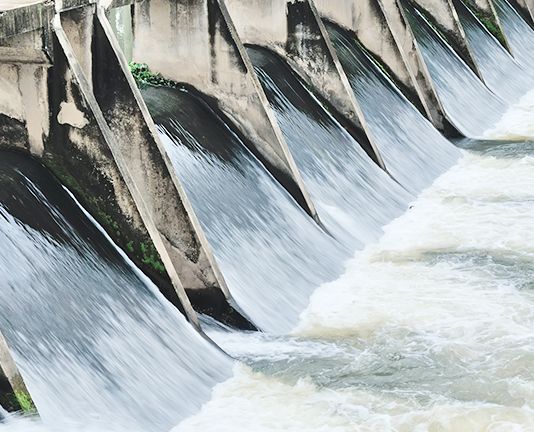
Though 71% of Earth’s surface is covered with water, clean and safe freshwater suitable for drinking, cooking, bathing, and growing food is a scarce resource, especially in certain parts of the world. An absence of clean and safe freshwater, and associated problems with sanitation, also significantly increases the risk of illness and diseases, specifically for the young and old. As the population continues to grow and societies develop, the need for water is only going to increase, resulting in greater competition between the demands of industry, agriculture, and domestic households. Operations of JSW are also very much dependent on the availability of water which makes it a material topic for the company. JSW has identified risks associated with water scarcity and is continuously working towards water conservation and reduction of water consumption in its operations. There were no water-related incidents with substantial impacts on costs/revenues in the last four fiscal years.
- During FY 2024-25, our freshwater consumption target is 32.1556 million m3.
- During FY 2024-25, our freshwater consumption target for water stress area is 31.5375 million m3. We have consumed 28.670515 million m3 water in water stress areas.
Water Neutrality Study at Barmer
JSW Energy Barmer recently underwent a comprehensive water assessment conducted by CII-TWI, culminating in the Water Neutrality Report. This report was developed to evaluate the plant’s water consumption patterns, conservation initiatives, and offset strategies, drawing from client-provided data, site visits, internal evaluations, and publicly available sources. While due diligence was exercised throughout the analysis, the findings are based on inputs that may carry inherent uncertainties. The report is intended to guide JSW Barmer toward achieving water neutrality in alignment with NITI Aayog’s national framework and does not constitute legal or regulatory advice. Responsibility for compliance with all applicable environmental and regulatory norms rests solely with the plant.
As part of this study, JSW Barmer demonstrated a strong commitment to identifying and managing both dependency- and impact-related water risks. The assessment confirmed that:
-
Dependency-related water risks such as reliance on freshwater for domestic and industrial use were actively considered. Observations revealed unaccounted-for water use in miscellaneous activities, prompting recommendations for improved metering, leakage control, and departmental monitoring.
-
Impact-related water risks including untreated sewage and inefficient dust suppression were also evaluated. These pose potential environmental and stakeholder concerns, which the plant is addressing through infrastructure upgrades and adoption of more efficient technologies.
-
The study included an assessment of future water quantity availability, with emphasis on optimizing cooling tower operations and reducing freshwater intake through advanced treatment strategies.
-
A thorough assessment of future water quality-related risks was conducted, particularly around chloride management. The report recommended the use of Advanced Oxidation Processes to mitigate scaling and corrosion risks, thereby enhancing operational resilience.
-
The impact on local stakeholders was carefully examined, especially in relation to untreated sewage volumes and water wastage. Recommendations focused on improving sewage collection systems and ensuring regulatory compliance through robust monitoring.
-
Finally, the study considered potential future regulatory changes at the local level, encouraging JSW Barmer to align its practices with sustainability benchmarks.
Through this assessment, JSW Energy Barmer has reaffirmed its dedication to sustainable water management and continuous improvement, positioning itself as a responsible steward of water resources in the region.