Climate Change
Task Force on Climate-related Financial Disclosures
The energy sector is not insulated from climate change impacts and particularly vulnerable to risks due to its dependency on fossil fuels, energy-intensive production processes, and large carbon footprints. However, the sector becomes a solution to climate change mitigation and provides with an opportunity for transition to production of non-fossil-based energy, i.e., energy from renewable sources, nuclear energy, hydrogen based energy, etc. As the world is transitioning towards net-zero, energy companies have a critical role to play in this transition by giving the world access to sufficient amount of renewable energy or non-fossil energy.
With renewables becoming a significant part of JSW Energy’s power generation mix of the future, we are on the forefront to cater to growing demand for the cleaner fuel mix leading towards a better tomorrow. Apart from Solar, Wind & Hydro, we are assessing emerging technologies across green hydrogen and its derivatives, offshore wind, and storage solutions, including battery, and pumped hydro storage. We have set our targets to reduce our emissions and contribute in mitigating climate change. We made a commitment to endorse and uphold the recommendations of the Task Force on Climate-related Financial Disclosures (TCFD). By aligning with these recommendations in its four pillars, we aim to enhance our understanding of the potential impact of climate change and make well-informed decisions regarding current and future decarbonisation strategies.
Climate Change Incentives
JSWEL provides incentives for the management of climate change issues, including the attainment of targets.
- CEO’s incentivization mechanism is associated with targets pertaining to increase in the overall share of renewable energy in the power mix.
- Development and implementation of mitigation plans of the physical risks identified under TCFD are part of CRO’s key responsibility areas.
- Ensuring thermal efficiency of thermal plant / Heat Rate is a part of the KRA of all Business Unit Managers.
Climate Governance
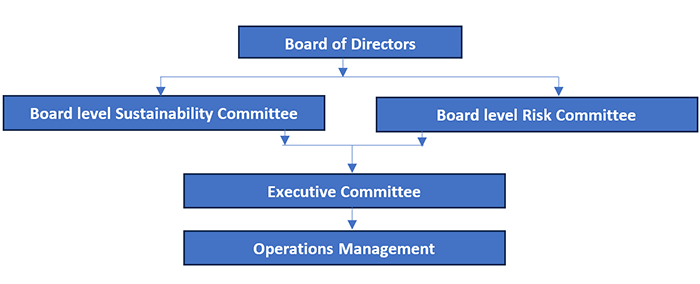
JSW Energy's board of directors demonstrates strong leadership in overseeing climate-related matters, ensuring that they are fully integrated into the company's overall business strategy. At the Board level, the Sustainability Committee and the Risk Management Committee review climate-related matters during biannual meetings and report to the Board of Directors. At the management level, the Executive Committee and corporate function teams oversee climate-related matters. We have a dedicated climate change policy with focus on preventing causes, mitigating impacts, and building resilience to climate change.
Strategy
Our sustainability efforts prioritise non-fossil-based energy and sustainable development, along with transparency in operations and investments. Recognising the significance of climate risks in our business strategy and decision-making, we conducted a climate change risk assessment. Scenario analysis as per RCP 4.5 and RCP 8.5 that played an important role in assessing climate-related risks and opportunities. Where, RCP 4.5 represents a pathway where greenhouse gas emissions are moderately stabilized by the end of the 21st century through significant mitigation efforts. On the other hand, RCP 8.5 depicts a high-emission pathway without adequate climate policies, resulting in substantial increase in greenhouse gas concentration.
By utilising scenario analysis, we gained insights into potential climate-related risks and opportunities. This assessment guides our climate strategy and business planning for the future. It has helped us embed sustainability at the heart of our business strategy.
Scenario Analysis
JSW Energy has conducted a climate scenario analysis using two Shared Socioeconomic Pathway (SSP) models to assess potential climate-related risks across short-, medium-, and long-term horizons:
-
SSP5-8.5 – High-Emission Scenario (Business-as-Usual): Represents a worst-case trajectory characterized by fossil fuel-driven growth and rising emissions. This scenario indicates a high likelihood of severe physical risks, including infrastructure damage, water scarcity, and increased flood events.
-
SSP2-4.5 – Stabilization Scenario (Optimistic): Assumes moderate mitigation efforts with emissions peaking around 2040. This scenario presents a lower likelihood of significant harm, with risks expected to be more manageable through adaptation.
Time Horizons and Risk Likelihoods
| Time Horizon | Risk Likelihood | Description |
|---|---|---|
| 2024–2027 (Short-term) | Moderate | Manageable impacts with potential operational challenges |
| 2027–2037 (Medium-term) | High | Increased exposure to floods, water stress, and infrastructure vulnerability |
| 2037–2052 (Long-term) | Low (SSP2-4.5) / High (SSP5-8.5) | Varies by scenario; long-term risks may be mitigated under SSP2-4.5 |
Risk Assessment and Mitigation Strategy
Physical Risk Assessment
JSW Energy has identified several location-specific physical risks requiring proactive mitigation:
| Physical Risks | JSW Asset | Mitigation Strategy |
|---|---|---|
| Landslides – High Risk (Short, medium & Long term) |
Karcham Wangtoo Hydropower, Baspa Hydropower Kuther Hydropower |
|
| Glacial Lake Outburst Floods (GLOF) – medium to High risk (Medium & Long term) |
Karcham Wangtoo Hydropower, Baspa Hydropower Kuther Hydropower |
|
| High Sediment Flow – medium to High Risk (Long term) |
Karcham Wangtoo Hydropower, Baspa Hydropower Kuther Hydropower |
High sediment flows already impact the operations seasonally during the monsoons
Additional measures in the long term suitable for our operational systems are-
|
Transition Risk Assessment
Policy Risk – Climate Regulations & National Commitments:
- Substitute coal-based boilers with waste gases from JSW Steel to reduce fossil fuel dependency
- Implement Internal Carbon Pricing (ICP) to allocate budget for GHG reduction initiatives
- Monitor evolving regulatory frameworks and align operations with national climate goals
Technological Risk – Shift to Green Energy:
- Commission India’s largest commercial-scale green hydrogen project (3,800 TPA capacity)
- Invest in emerging energy-efficient technologies across operations
- Expand energy storage portfolio targeting 40 GWh / 5 GW capacity by 2030
- Continuously evaluate and adopt low-carbon innovations
Reputational Risk – Market Expectations & Incentives:
- Commit to carbon neutrality by 2050
- Diversify renewable energy portfolio including solar, wind, hydro, and emerging technologies
- Communicate sustainability milestones transparently to stakeholders
- Leverage government subsidies and incentives to accelerate RE adoption
Climate Related Opportunity
| Opportunity | Opportunity Type | Opportunity Description |
|---|---|---|
| Shift in consumer preferences | Energy source | JSW Energy intends to increase its renewable portfolio up to 10GW capacity by FY 2025. This target has been overachieved. Further, we intend to have total 30 GW capacity with 70% renewable capacity by FY 2030. |
| Lower costs of Solar Power generation products | Products and Service | In the last 8-9 years the cost of solar panels has reduced by 75%-80% and the technology has improved by leaps & bounds. The combined effect has brought the cost per unit down and very comparable or even lesser than the conventional thermal power costs. These reduced costs serve as an opportunity for JSW Energy to foray into the renewable space at a quick pace |
| Use of new technologies | Energy Source |
|
| Raising investments through green bonds) | Market | JSW Hydro Energy has established Green Bond Framework (the “Framework”). The purpose of this Framework is to have a single robust methodology in place for all future Green Bonds, ensuring that for each instrument issued the principles of this Framework apply. Generally, the Framework is aligned with the ICMA Green Bond Principles (“GBP”, 2018) which are a set of voluntary guidelines that recommend transparency and disclosure and promote integrity in the development of the sustainable finance market. |
| Access to new assets (increased diversification of assets) | Market |
|
| Recycling | Resource Efficiency |
|
Risk Management
Our risk management framework, based on the COSO framework, allows us to identify and assess risks, develop response strategies, and monitor our operations effectively. The framework considers objectives related to operations, reporting, and compliance. Through our Climate Change Risk Assessment Framework, we assess risks and opportunities at both the asset/plant level and corporate level. Mitigation plans and progress towards low-carbon and sustainable development targets are presented to the Executive Committee and board for review and approval. Our 2030 low-carbon and sustainable development plan is a result of our comprehensive risk management process.
Metrics and Targets
Metrics and targets play a pivotal role in guiding and evaluating a company's sustainability and climate-related efforts. We have used the following metrics to cater to the high impact climate risks.
- GHG Emissions Intensity (tCO2e/MWh)
- Specific Water Consumption (m3 / MWh)
- Air Emissions (%)
- RE Percentage (%)
- Waste Ash Utilisation (%)
The trends of the above are presented in our Integrated Report. Regularly monitoring these metrics is essential for evaluating our company's performance in addressing climate change. In line with this objective, we are dedicated to enhancing the transparency of our climate-related data and improving our overall climate performance. We are actively implementing innovative and sustainable practices throughout our operations to reduce our carbon footprint, minimise energy and water consumption, optimise resource usage, and promote circularity. Through these efforts, we are fulfilling our role as responsible environmental stewards.
Greenhouse Gas Emissions and Energy Resource Planning
At JSW Energy, the company produces electricity majorly from thermal power plants. Thermal power plants, using a significant amount of coal, result in high greenhouse gas emissions that have a detrimental effect on the planet. Increased GHG emissions will accelerate any potential negative impacts on climate change. Additionally, the increased emissions will have negative health impacts on the communities around us. Stricter environmental laws and regulations such as the Perform, Achieve, and Trade (PAT) mechanism, Carbon tax, Increased Coal Cess will lead to higher energy costs for our stakeholders and high cost of production and lower profit margins for our operations.
The company’s operations will also have potentially adverse impacts on its social license to operate which is intrinsically tied to its contributions towards the well-being of the wider community and environment affecting our standing with our investors as well as society at large. Thus, mitigating the climate change risk and reducing operating costs has led us to increase the renewable energy capacity. This will lead to reduced costs for the company’s operations and will help to provide clean and affordable energy to the customers.
To prevent a potential increase in costs JSWEL has taken a number of measures. The company is in the process of substituting the coal-based boilers at one of its locations with the waste gases from the Group company, JSW Steel. This avoids the need for fossil fuel thereby reducing the policy and market risks. Our ICP of 12 USD/tCO2e of carbon will allow us to adopt a balanced view of the feasibility of any proposed low carbon in the near and medium term, ensuring that we continue in our low carbon journey without losing our competitive edge. Additionally, the company’s sees the increasing demand for renewable energy as an opportunity for JSW Energy alongside India’s commitment to have 500 GW of fossil free energy by 2030. The company is committed to expand only in the renewable space and by 2030, 85% of its power mix is expected to be from RE which is a significant increase from the current levels.
JSWEL is trying to increase the percentage of the Renewable Energy Portfolio to maximise our positive impact through our business activities. The company’s efforts have a significant impact on contributing towards decarbonizing the Grid Power. The company can measure its impact by monitoring the increase in its renewable energy portfolio and the lowering of the grid emissions.
Financial Risks and Opportunities
| Risk/Opportunity | Description |
|---|---|
| Risk 1: Flood-Induced Shutdowns of Hydropower Plants | During peak monsoon, JSW Energy’s hydropower plants generate 25–30 million units daily, earning ₹5.62–6.75 crore per day. A 10-day shutdown due to flooding could result in a revenue loss of ₹56.25–67.5 crore. To mitigate this, the company has implemented a comprehensive flood response system, including upstream warning mechanisms, public alert infrastructure, and catchment area plantations. The total annual cost of these preventive measures is ₹72 lakh, comprising ₹2 lakh for tree plantations, ₹10 lakh for system maintenance, and a one-time capital investment of ₹60 lakh in flood monitoring equipment. |
| Risk 2: Escalating Coal Cess and Thermal Efficiency Challenges | With the government’s push to discourage fossil fuel use, coal cess is expected to rise to ₹800–1,000 per metric ton by 2030. Given JSW Energy’s coal consumption of 10–12 million tonnes, this could translate into an annual financial impact of ₹800–1,200 crore. To counter this, the company is modifying its thermal boilers to use blast furnace waste gases instead of coal. Each boiler retrofit costs ₹150 crore, and with one already completed and another planned, the total mitigation cost stands at ₹150 crore. This transition supports both cost reduction and decarbonization goals. |
| Opportunity 1: Shift in Consumer Preference | JSW Energy is harnessing both national and global momentum toward clean energy by executing an ambitious expansion plan under its "Strategy 3.0." The company has scaled its generation capacity from 4,559 MW in FY 2021 to 10,875 MW in FY 2025 and is targeting 30 GW by FY 2030 through investments in wind, solar, hydro, battery energy storage, and pumped storage projects. To support this transformation, JSW Energy has committed ₹1,30,000 crore in capital expenditure between FY 2026 and FY 2030. This strategic shift is expected to significantly boost financial performance, with projected FY 2030 run-rate EBITDA reaching ₹23,917–₹26,574 crore, 2.7 to 3.0 times its FY 2025 proforma EBITDA of ₹8,858 crore. By aligning with evolving consumer preferences and government policies, JSW Energy is positioning itself as a leading force in India’s renewable energy landscape. |
Policy Influence
At JSW Energy, we aim to act in collaboration with stakeholders and create value for them. We engage with various stakeholders such as industry, government and regulators, customers in the policy advocacy efforts. Across all our operational locations, we follow a well-defined and rigorous process to evaluate and prioritise significant public policy issues.
The Board and the Sustainability Committee oversees policy advocacy issues and lobbying activities, providing an oversight for addressing them. It is ensured that the issues are in alignment with our company’s interests and strategic priorities, in accordance with the applicable policies including, Policy to make our world a better place, Policy on Business Conduct, and Policy on Climate Change.
Our direct policy advocacy efforts including lobbying activities are aligned with its policies and strategic priorities and goals. We may engage in indirect lobbying through multiple industry organizations and thinktanks at local, regional and global level. These associations include CII, FICCI, ASSOCHAM, Indian Chamber of Commerce etc. We believe in the power of collective action, especially on challenging topics that cannot be tackled alone, including many environmental and social issues. The membership in any such organisation does not imply that we agree with or endorse every position that these groups may take.
We work with policymakers, trade associations and various climate-focused membership bodies and stakeholder initiatives. We engage in climate-related advocacy to encourage the reductions in greenhouse-gas emissions and further transition towards net zero through government policies and private sector leadership. We are committed to conducting all our direct and indirect lobbying and advocacy work in line with the Paris agreement. Further, our efforts are aligned with the Paris Agreement, contributing to limiting average global temperatures to well below 2 degrees Celsius, and include strong support for policies that will incentivise emission reductions. In case of any misalignment, we ensure that we take actions against it and transparently communicate our stand to the respective stakeholders.
We also take part in providing our alignment on topics such as Greenhouse Gas Emissions, Energy Transitions, Carbon Tax and Carbon pricing, Water and Waste Management including our initiatives on fly ash utilization. In case of any misalignment, it is ensured that the company’s right to act is reserved as an individual company and transparently communicate our stand to the respective stakeholders.
We regularly review our involvement in industry and trade organisations to assess the relevance of our participation in line with the company’s strategy. The details of our memberships in trade associations can be found in the Integrated Report FY 2024-25.
During the reporting year, we contributed ₹132.45 Lakh towards our affiliated trade associations comprising our annual subscription fees.
The details of our contribution are provided in the table below:
| Trade Association |
Contribution in Lakhs (₹) |
|---|---|
| Southern Regional Power Committee | 20.87 |
| Association of Power Producers | 25.00 |
| Western Regional Power Committee | 45.28 |
| Northern Regional Power Committee | 12.00 |
| Elekore Systems (Energy Analytics & Market Research Company | 7.67 |
| National Solar Energy Federation of India | 2.00 |
| Confederation of Indian Industry (Sponsorship Fee) | 10.00 |
| Wind Independent Power Producers Association | 4.32 |
| Indian Wind Power Association | 5.31 |
| Total | 132.45 |
We have not made any political contributions, spending on ballot related measures or referendums as well as lobbying or similar activities, in past four financial years.
The cause and activities supported through these organisations are as follows:
| Issue or topic | Corporate Position | Description of Position / Engagement |
|---|---|---|
| Enhancement and maintenance of power systems | Support | We are a member of Northern Region Power Committee (NRPC) and Southern Region Power Committee (SRPC) who are working towards maintenance and improving the performance of grid. We expect our efforts through NRPC and SRPC would help in improving the distribution of power inter-state and inter-region, through maintenance of the power distribution system and to resolve issues related to efficiency and economy of the power system. |
| Enhancing energy transmission and distribution | Support | We are a member of Association of Power Producers (APP). Through APP we are working towards bridging the gap between private sector and government of India for efficient transmission and distribution of power to customers. |
| Enhancement and maintenance of power systems | Support | We are a member of Western Regional Power Committee (WRPC), which plays a critical role in ensuring the reliability and stability of the power grid in the western region of India. Through WRPC, we actively participate in initiatives aimed at improving grid performance, optimising power distribution across states, and addressing operational challenges. Our engagement helps in enhancing coordination among stakeholders, ensuring efficient power flow, and contributing to the overall economy and efficiency of the regional power system. |
JSW Energy’s Approach to a Just Transition
JSW Energy is committed to driving a fair and inclusive energy transition that balances environmental sustainability with social equity and economic resilience. Building on its “Make Our World a Better Place” philosophy and Climate Change Strategy, the Company aligns its transition initiatives with the global Just Transition framework to ensure that no stakeholder is left behind in the journey toward a low-carbon future.
Key Objectives
-
Achieve net-zero carbon emissions by 2050 for operations under direct control.
-
Mitigate social and economic risks associated with decarbonisation.
-
Enable communities and workers to adapt to climate impacts through reskilling, employment support, and social protection.
Core Principles
-
Inclusive Planning: Anticipate the effects of energy transition on workers, suppliers, and communities.
-
Resilience and Adaptation: Strengthen the ability of employees, suppliers, and communities to withstand and adapt to climate and market changes.
-
Decent Work & Social Protection: Promote job creation, skill development, gender inclusion, and support for vulnerable groups.
-
Environmental Responsibility: Remediate environmental impacts without transferring the burden to local communities.
-
Human Rights Respect: Safeguard labour and gender rights and promote open social dialogue.
-
Stakeholder Engagement: Maintain transparent, ongoing consultation with employees, unions, local communities, suppliers, and consumers.
Governance & Implementation
-
Board-level oversight and integration of Just Transition priorities into risk management and ESG governance.
-
Use of KPIs and performance indicators to monitor progress.
-
Internal training and awareness programs for decision-makers on equitable transition strategies.
-
Regular disclosures through the Annual Report and BRSR on transition-related performance.
Stakeholder Engagement
-
Collaboration with workers, unions, community groups, suppliers, and government bodies to co-create transition plans.
-
Active advocacy in industry associations for socially balanced climate policies.
-
Engagement at the local and regional levels to address job, livelihood, and social risks from the energy shift.
Worker & Supply Chain Support
-
Reskilling and redeployment programs for employees affected by technological or operational shifts.
-
Support for SMEs and suppliers through access to technology, finance, and sustainability training.
-
Due diligence across the value chain to uphold human rights and fair labour practices.
Community & Customer Focus
-
Partnership with communities to assess and mitigate livelihood and environmental impacts of transition.
-
Investments in education, health, and green livelihood programs for local well-being.
-
Ensuring affordable and clean energy access for customers during the transition.
Transparency & Accountability
-
Regular reporting on actions, progress, and stakeholder consultations through public sustainability disclosures.
-
Continuous evaluation to ensure that decarbonisation contributes to economic opportunity, social justice, and environmental integrity.